 English
 русский
 Português
 عربى
عربى
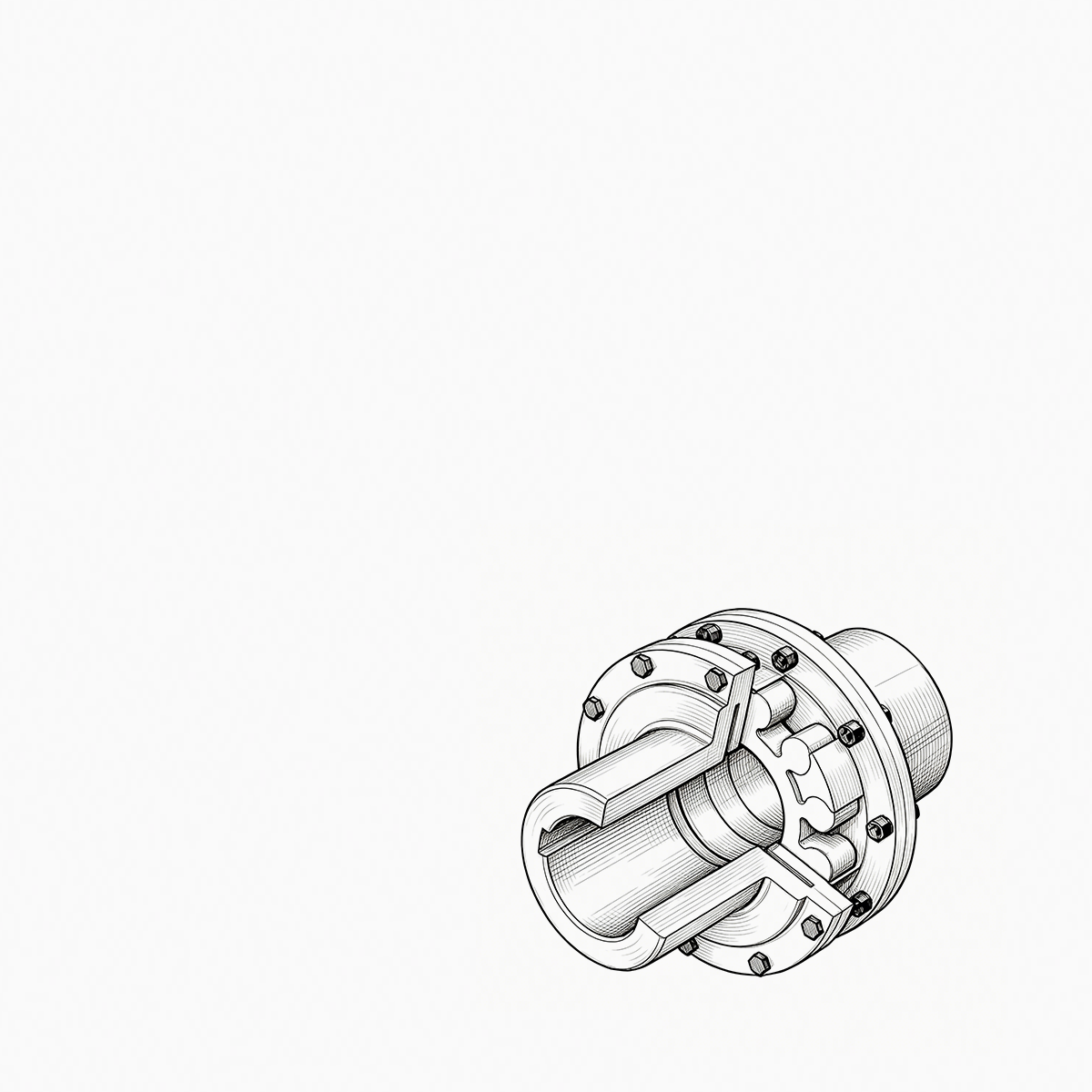
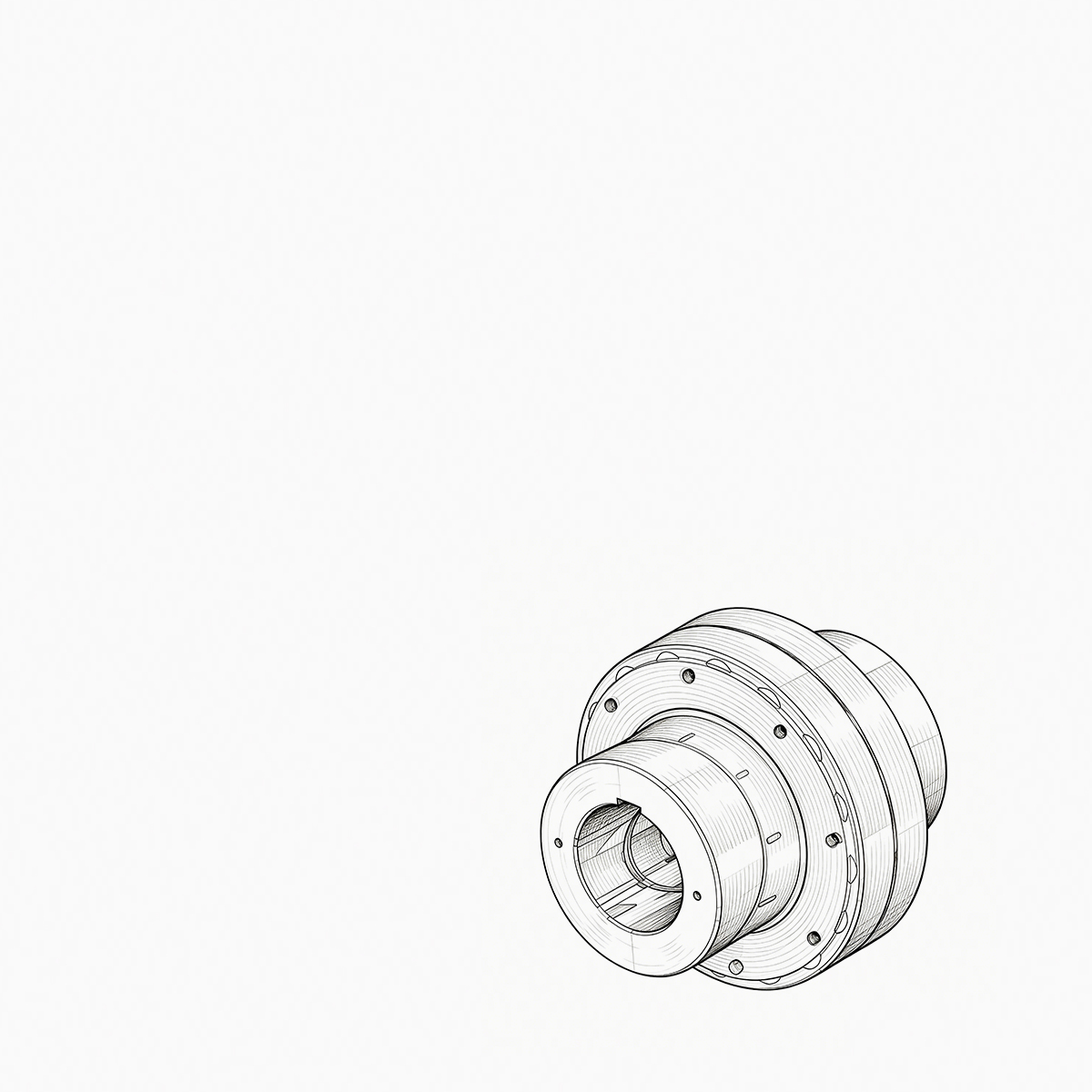
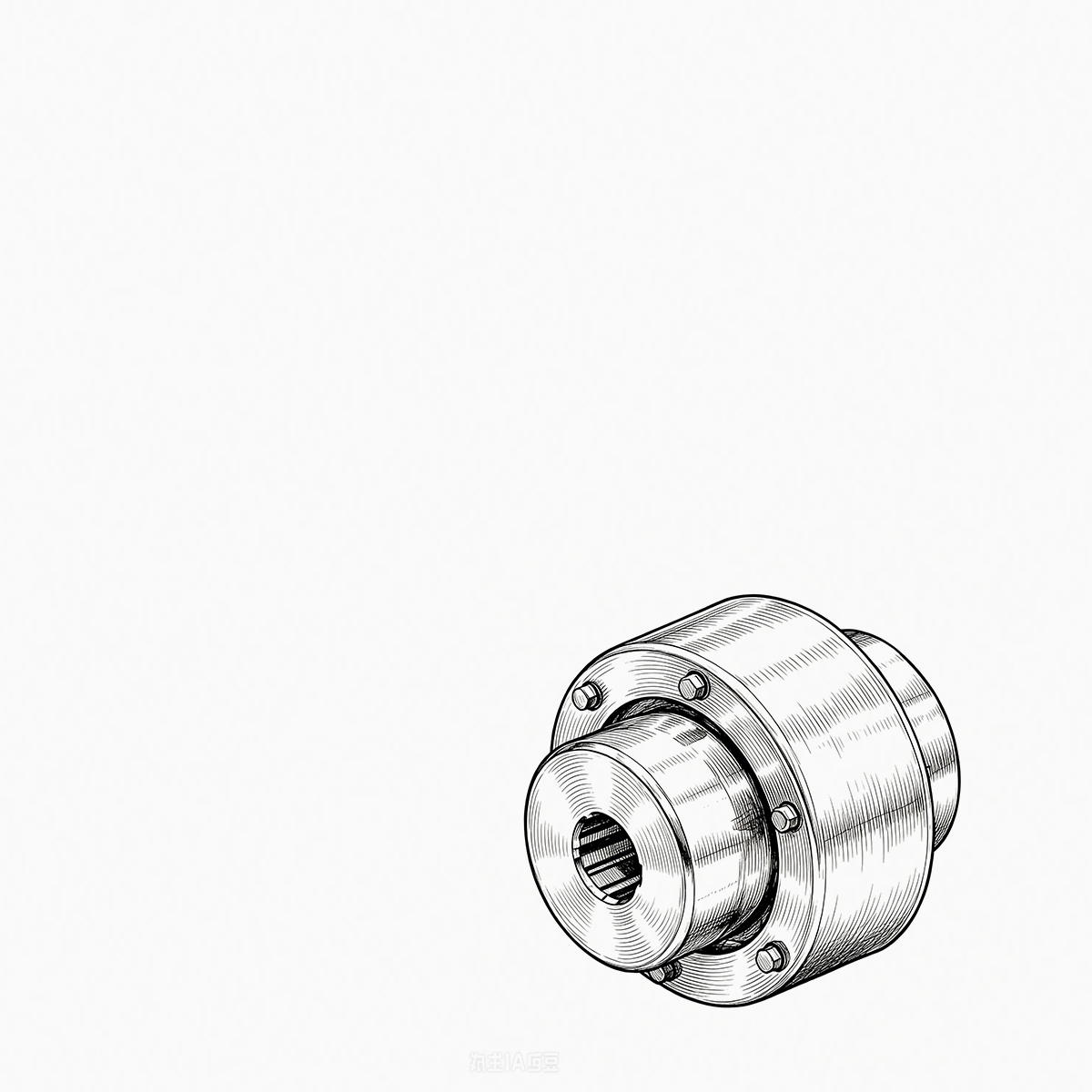
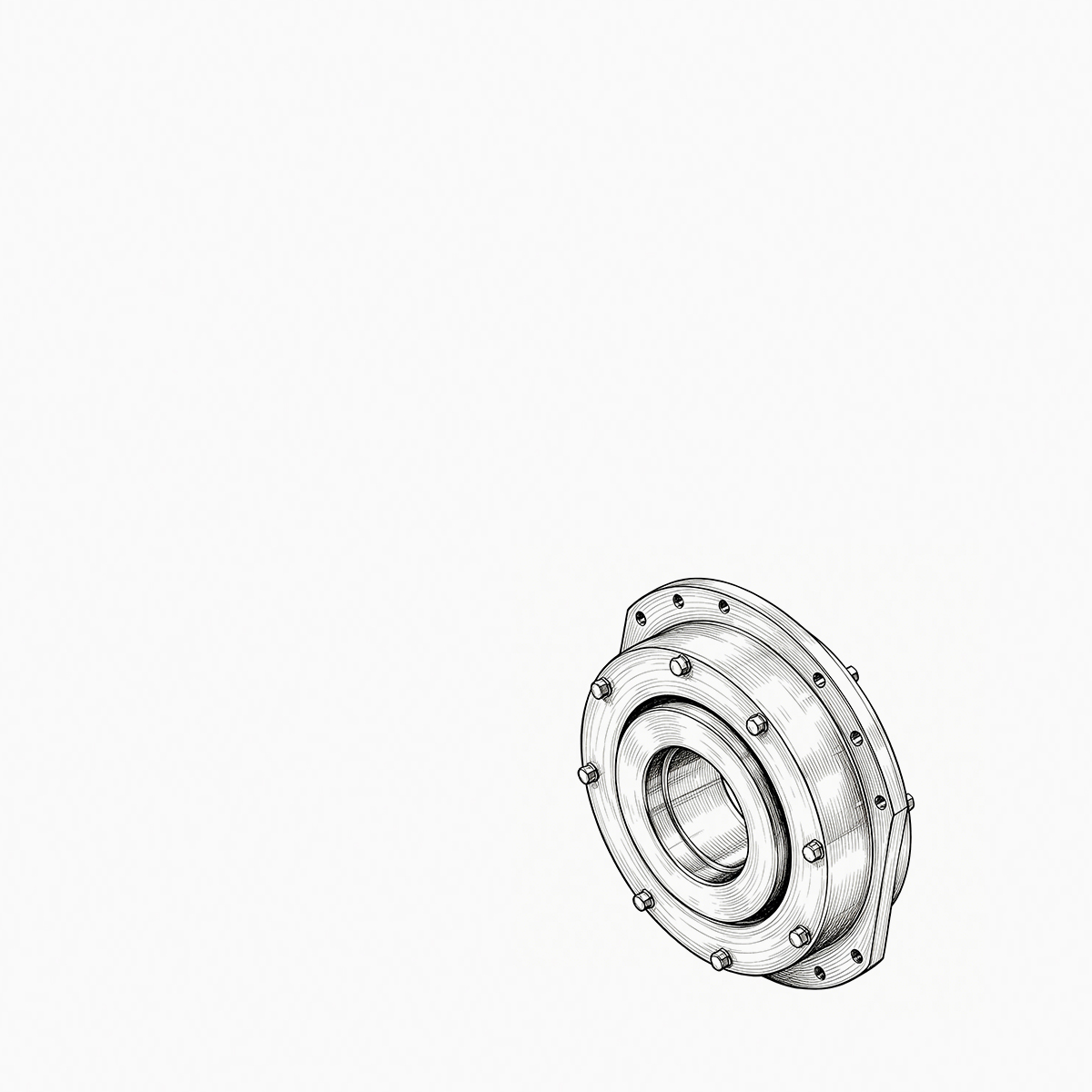
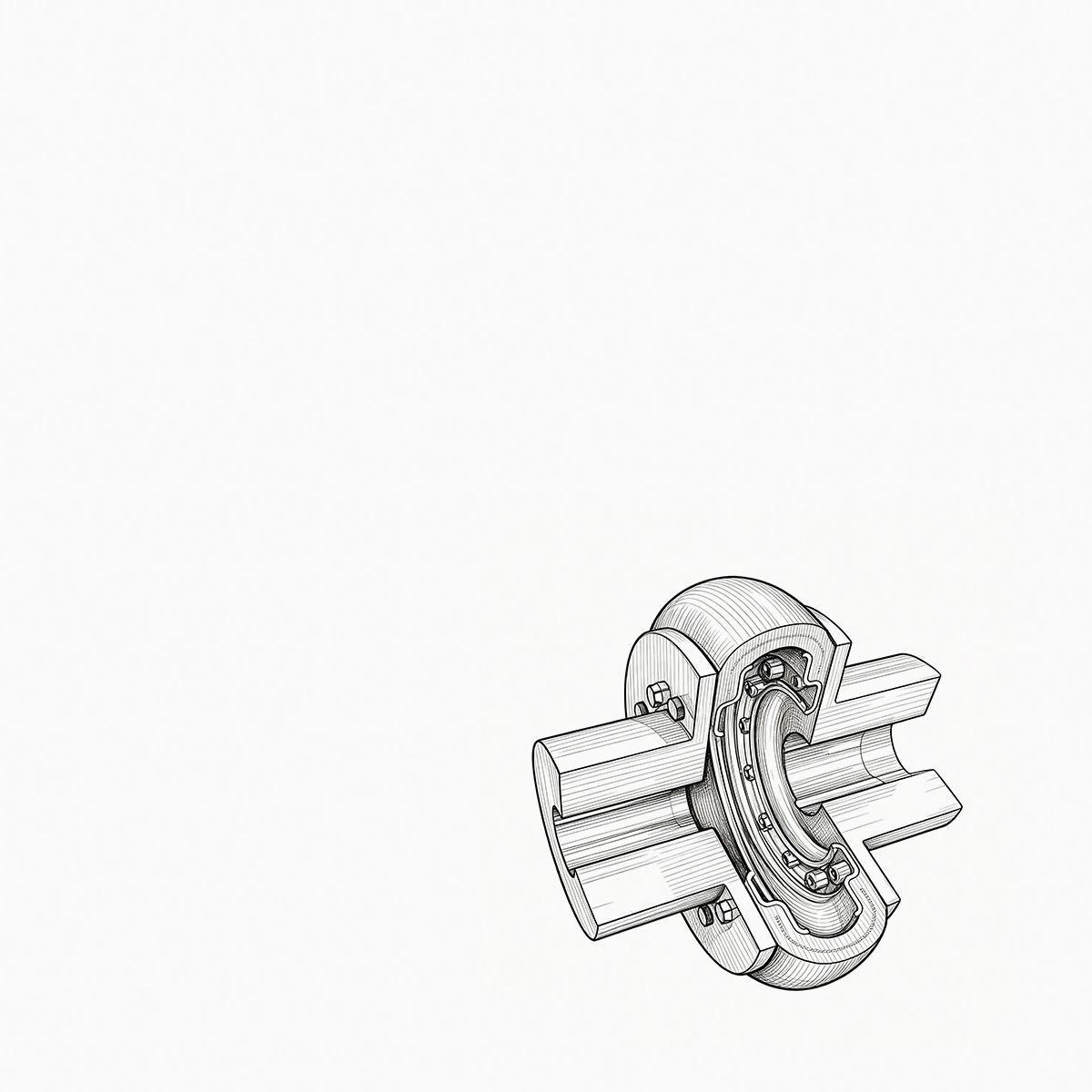
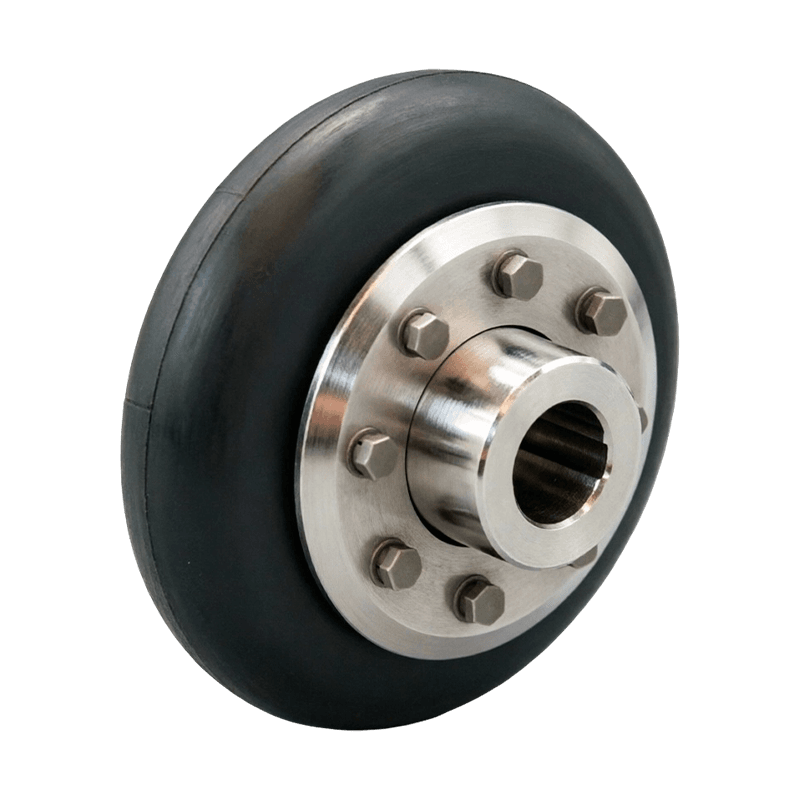
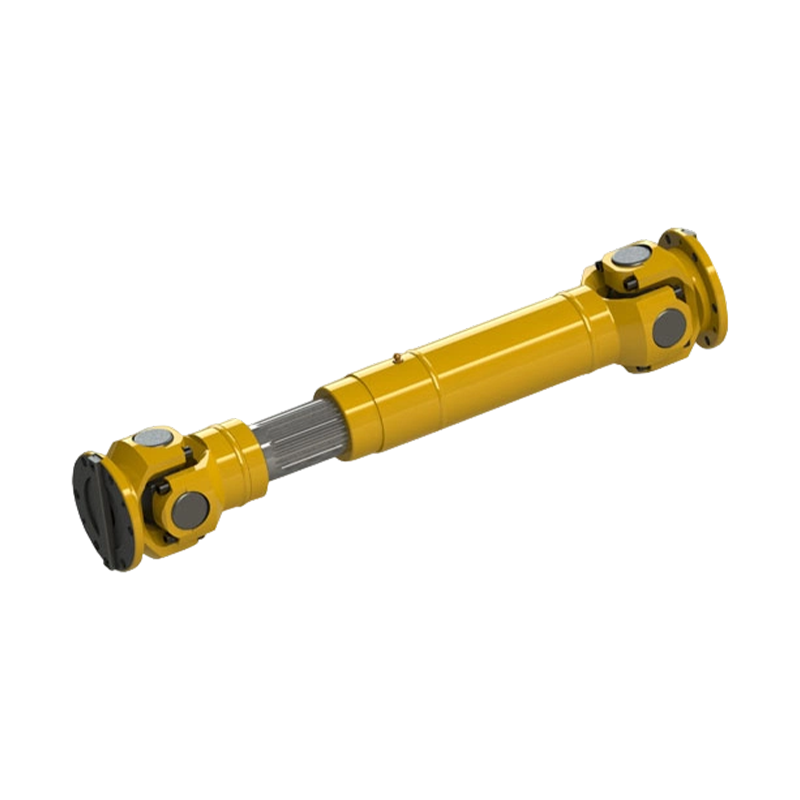
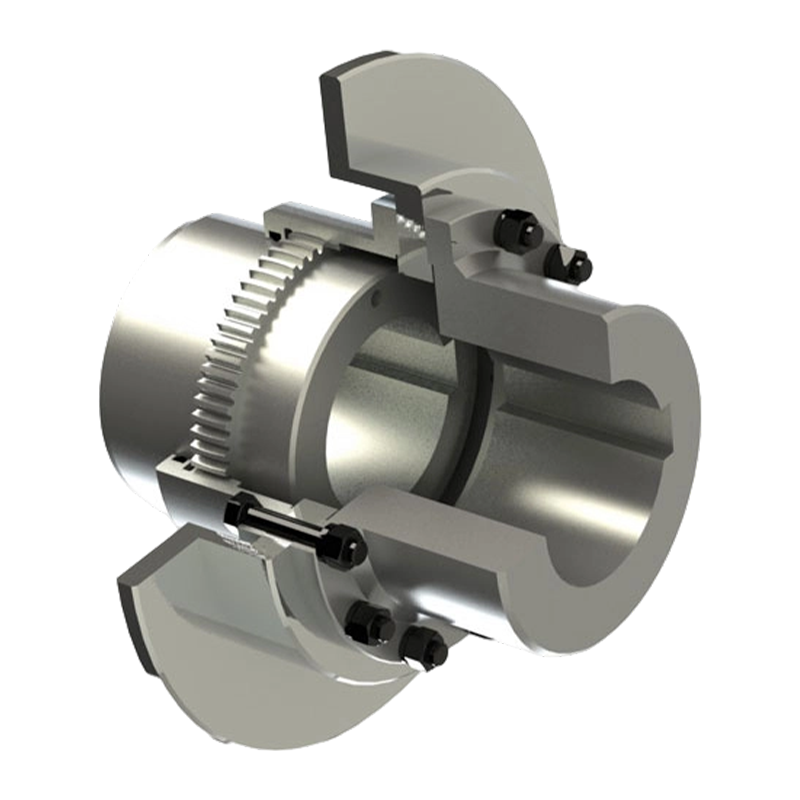
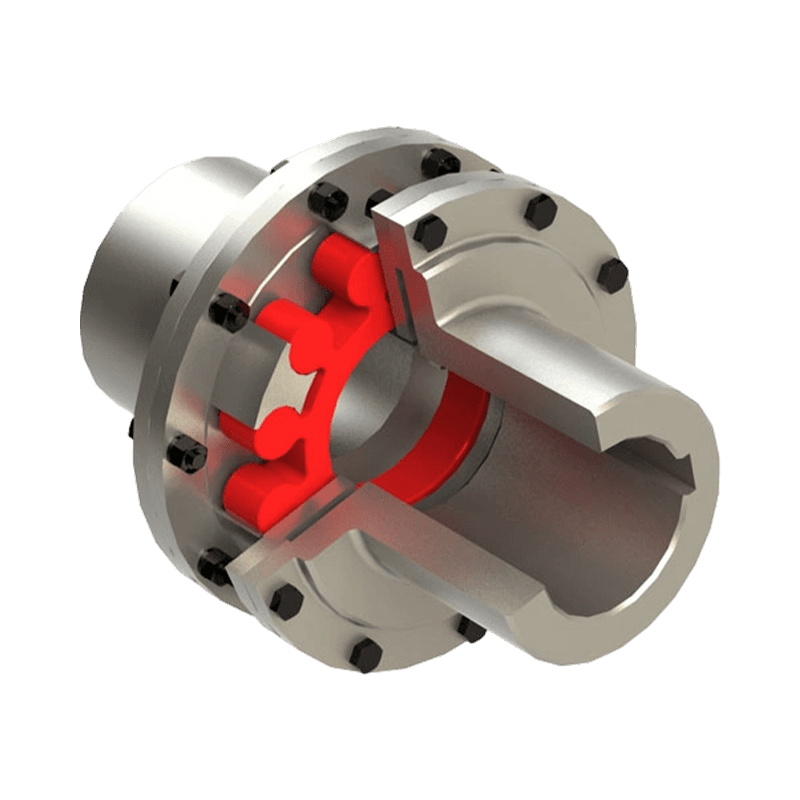
Industrial Couplings: The Definitive Technical Encyclopedia – Classification, Sizing, Failure Prevention, and Lifecycle...
READ MORE
Disc Coupling Manufacturers: A Practical Selection Guide for Industrial Buyers
Admin 2026-09-10Content
Your compressor train is running at 9,800 rpm when the vibration monitor triggers an alarm. The first component your maintenance team inspects is the coupling. If the disc coupling manufacturer you ordered from cannot quickly supply a replacement disc pack with the correct material grade, lamination count, and bore fit, every hour of downtime converts directly into production loss. This is the practical reality that makes manufacturer selection a procurement decision with immediate operational consequences rather than a routine sourcing exercise.
What a Disc Coupling Manufacturer Should Deliver
A disc coupling transmits torque through a stack of thin stainless steel discs. As the shafts rotate, the discs flex elastically to absorb angular misalignment, parallel offset, and axial end movement. Because there are no wearing or sliding parts, a well-built disc coupling runs maintenance-free for years in high-speed service, provided the disc pack is designed for the actual cyclic loads. Typical applications include pumps, compressors, fans, generators, and other rotating equipment where the lubrication requirement or backlash of a gear coupling is not acceptable.
The manufacturer's role is not limited to cutting and bolting discs together. The areas that separate a reliable disc coupling supplier from a parts assembler include:
- Material selection: The disc pack must be made from a spring-grade stainless steel that resists fatigue under cyclic bending. Hubs require steel with appropriate strength for the applied torque and bore size. Material certificates should verify the actual grade.
- Engineering verification: A manufacturer that calculates torsional stiffness, critical speed, and service factor can confirm that the coupling matches your driver and driven equipment. This calculation becomes essential for variable-speed drives and reversing loads.
- Machining precision: Bore tolerance, face runout, and concentricity determine how smoothly the coupling runs at speed. Sloppy machining appears as vibration, which shortens bearing life and contaminates the condition-monitoring baseline.
- Quality control: Inspection of every manufactured lot, with documented dimensional reports and material certificates, is the minimum a serious buyer should accept. A manufacturer with a complete set of testing instruments can prove compliance instead of merely claiming it.
Disc vs. Diaphragm Couplings: What the Comparison Tells You
Industrial buyers often use the terms "disc coupling" and "diaphragm coupling" as if they were identical. Both are metallic flexible couplings, but their flexible elements work differently.
A disc coupling uses stacked laminations that bend between the driving and driven hubs. A diaphragm coupling uses one or more continuous steel diaphragms that flex when the shafts move out of alignment. Each design offers specific advantages, and a manufacturer that builds both demonstrates a broader engineering foundation.
| Characteristic | Disc Coupling | Diaphragm Coupling |
|---|---|---|
| Flexible element | Stacked stainless steel disc packs | Continuous thin metal diaphragm |
| Misalignment capacity | Moderate angular and parallel | Moderate angular and parallel |
| Maintenance | None; no lubrication | None; no lubrication |
| High-speed behavior | Excellent with adequate pack design | Excellent; predictable stiffness |
| Torque density | Good for moderate to high torque | Strong in high-torque turbomachinery |
| Torsional stiffness | Depends on lamination count | Generally high and predictable |
For a plant engineer, the practical takeaway is that both coupling families offer maintenance-free metallic flexibility. The difference becomes relevant when you define your torque, speed, misalignment, and envelope requirements. In some applications, a disc pack gives the lowest cost per unit of torque. In others, a diaphragm coupling provides more predictable torsional stiffness and less risk of fretting corrosion between laminations. A manufacturer that builds both types can recommend a solution based on your duty cycle rather than steering you toward a single product line.
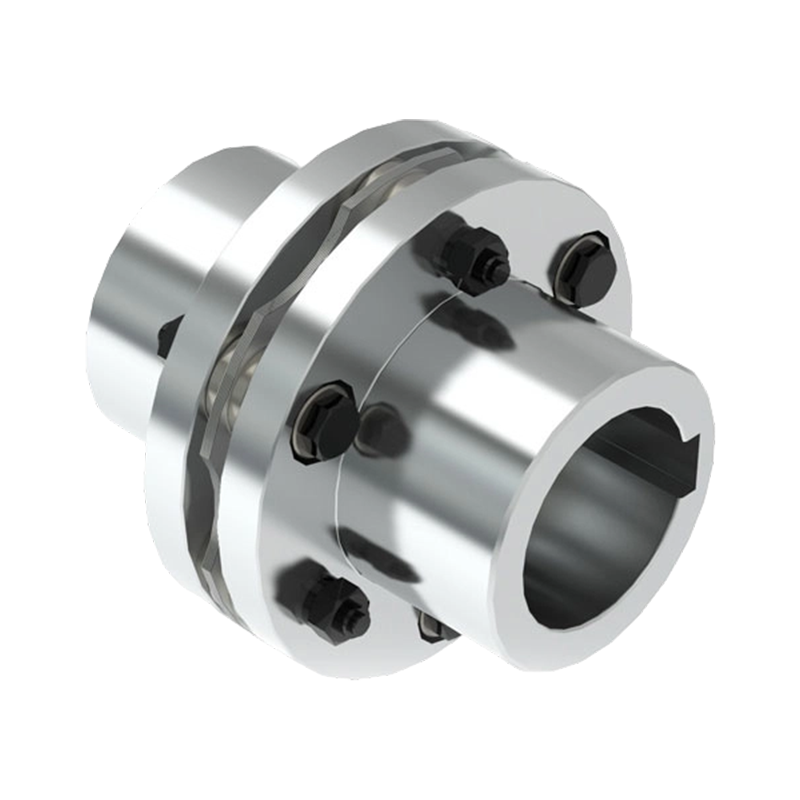
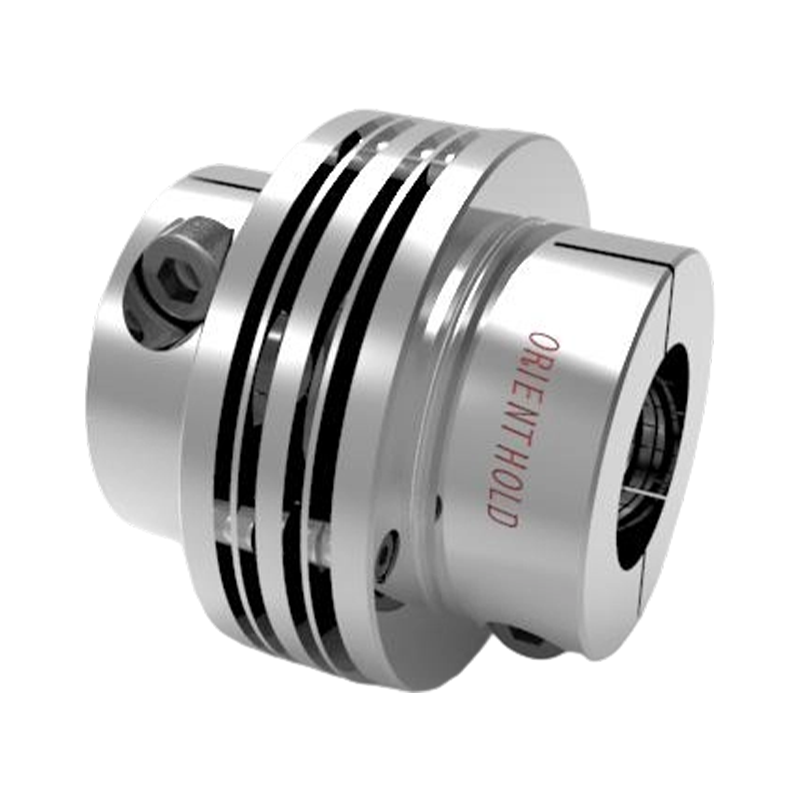 JMII Series Disc Coupling for Compact High-Precision TransmissionThis all-metal disc coupling uses stacked stainless steel sheets to compensate misalignment without lubrication. Its compact, single-piece design suits short-distance, high-precision industrial drives where maintenance-free operation and temperature resistance matter.View Product →
Application Expertise Coupling Manufacturers Bring to Heavy Industry
A disc coupling that performs perfectly on a paper machine may fail within weeks on a steel mill runout table or a marine propulsion shaft. Application expertise is what lets a manufacturer adjust material, heat treatment, and disc pack configuration to the real working environment.
Steel and metallurgy plants need couplings that handle shock loads, elevated temperatures, and the vibration of rolling equipment. Marine installations require corrosion-resistant materials and documented traceability. Mining machinery subjects couplings to dust, impact, and high misalignment. Hoisting and construction equipment demands fail-safe design because a coupling failure on a crane can endanger people. Petrochemical and power generation facilities prioritize fire resistance and long intervals between overhauls.
When you evaluate a coupling manufacturer, ask directly which industries their couplings serve. A manufacturer that demonstrates successful supply to heavy industrial sectors is more likely to understand service factors, starting torque, reversing loads, and the other real conditions that standard catalogs rarely capture. At Zhenjiang Orienthold, the product range spans gear, universal, elastic, and diaphragm couplings used in steel-metallurgy, marine, petrochemical, mining, hoisting, and power generation applications. You can see the industry scope on the hoisting and construction machinery page.
In practice, this also means the manufacturer must be willing to adjust standard designs. A catalog coupling may need a modified hub bore, a different disc pack material for corrosive environments, or a spacer length that matches an existing machine envelope. The ability to execute these modifications without compromising quality is a sign of real manufacturing depth.
For applications where the driver and driven machine are separated by a long distance or where the coupling must span a bulkhead or a frame, a diaphragm coupling with an intermediate shaft is a practical solution. The JMIIJ diaphragm coupling with intermediate shaft is built for exactly such layouts, combining low maintenance with predictable torsional behavior.
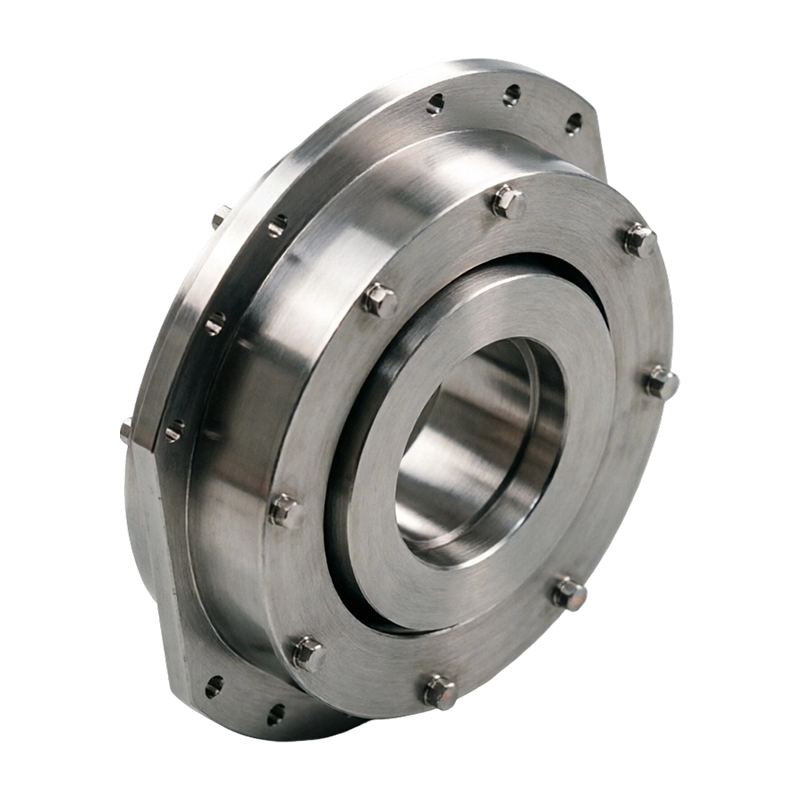
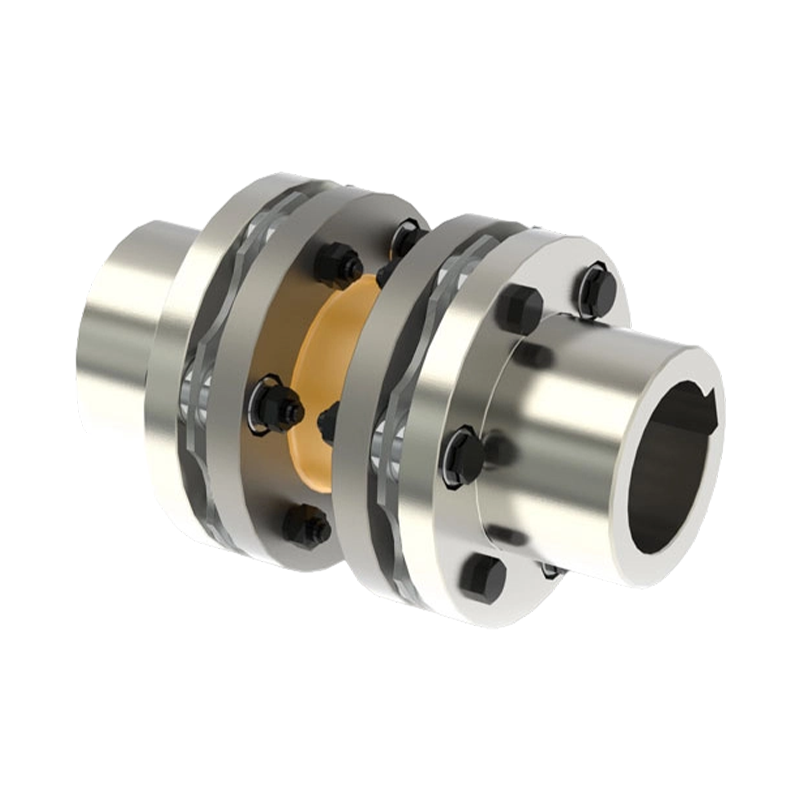 JMIJ Diaphragm Coupling with Intermediate Shaft for Long DistancesBuilt with a double-disc and intermediate shaft layout, this coupling transmits torque across longer separations while providing large misalignment compensation. Its lubrication-free, wear-resistant design reduces maintenance in demanding environments like bulkheads or frame spans.View Product →
Questions to Ask a Disc Coupling Manufacturer Before You Order
A competent disc coupling manufacturer should welcome technical questions. Vague answers, missing documentation, or an unwillingness to share design data are warning signs. Use the following list as a practical audit when you evaluate candidates.
- What steel grade is used for the disc pack, and what is its fatigue endurance limit under cyclic bending?
- Can you supply a dimensioned general arrangement drawing and a cross-section drawing for approval before production?
- What bore tolerance and surface finish can you guarantee, and will you machine to metric or inch standards?
- Do you perform balancing on every coupling, and at what speed and balance quality grade?
- What is your process for verifying material certificates and heat treatment records?
- Can you provide reference installations in my industry, with contact details?
- What is your spare parts lead time for disc packs and replacement hubs?
These questions do more than reveal the manufacturer's capability. They force the supplier to engage with your specific operating conditions. A manufacturer that responds with concrete numbers, drawings, and references has the engineering discipline that protects your plant. If you want a structured overview of the same selection logic, the article on critical factors for selecting the right industrial coupling goes into additional depth.
Making the Final Decision
The right disc coupling manufacturer is not necessarily the largest or the cheapest. It is the supplier that can prove four things: a sound material specification, precise machining, a functioning quality system, and real application knowledge. When those four are in place, the coupling will do what the datasheet promises.
For a buyer facing a critical replacement or a new machine project, the practical path is to shortlist manufacturers, send them your duty data, and compare the technical documentation they return. The supplier that asks about speed, misalignment, service factor, and operating environment before quoting is the one that understands couplings as engineered components rather than commodity parts.
Zhenjiang Orienthold Machinery Co., Ltd. is one manufacturer that follows this engineering-first approach. Its diaphragm and gear coupling lines, machining capability, and industry experience make it a credible partner for industrial coupling procurement. Start with the application requirements on your drawing, and let the manufacturer's response tell you whether they belong on your approved supplier list.
PREV: No previous articleNEXT: Diaphragm Couplings: Working Principles, Benefits, and Selection Guide
Be the First to Know
For exclusive deals and latest offers, sign up by entering your email address below.
Related products
News
-
-
During a routine vibration survey on a high-speed compressor train, engineers found a 4.5 mm/s velocity spike at the mo...
READ MORE -
China's coupling industry is at a critical historical juncture of transformation from scale expansion to quality and eff...
READ MORE -
Gear Coupling vs. Drum Gear Coupling: The Core Difference The main difference is that "gear coupling" is a broad catego...
READ MORE -
Rotating Equipment Engineering Why Diaphragm Coupling Wins in High-Speed Turbomachinery A close look at how elastic dia...
READ MORE


ABOUT US
PRODUCTS
INDUSTRIES
CONTACT US
- Phone: +86-18652865511
- Email: sales@ohmach.com
- Address: No.1, Minying Developing Zone, Zhenjiang, Jiangsu, China
Copyright Zhenjiang Orienthold Machinery Co., Ltd. All Rights Reserved.
 Custom Industrial Shaft Coupling Manufacturers