 English
 русский
 Português
 عربى
عربى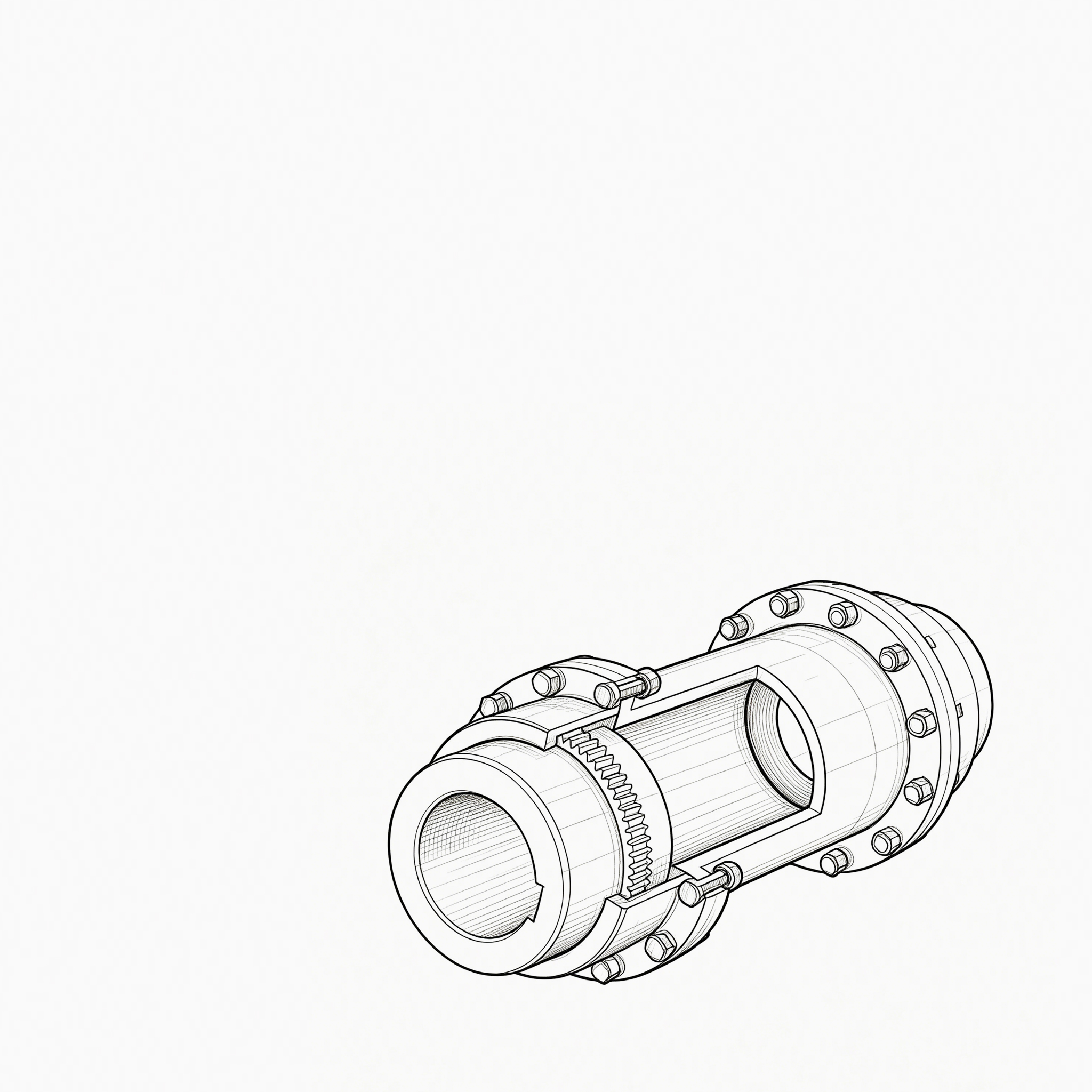
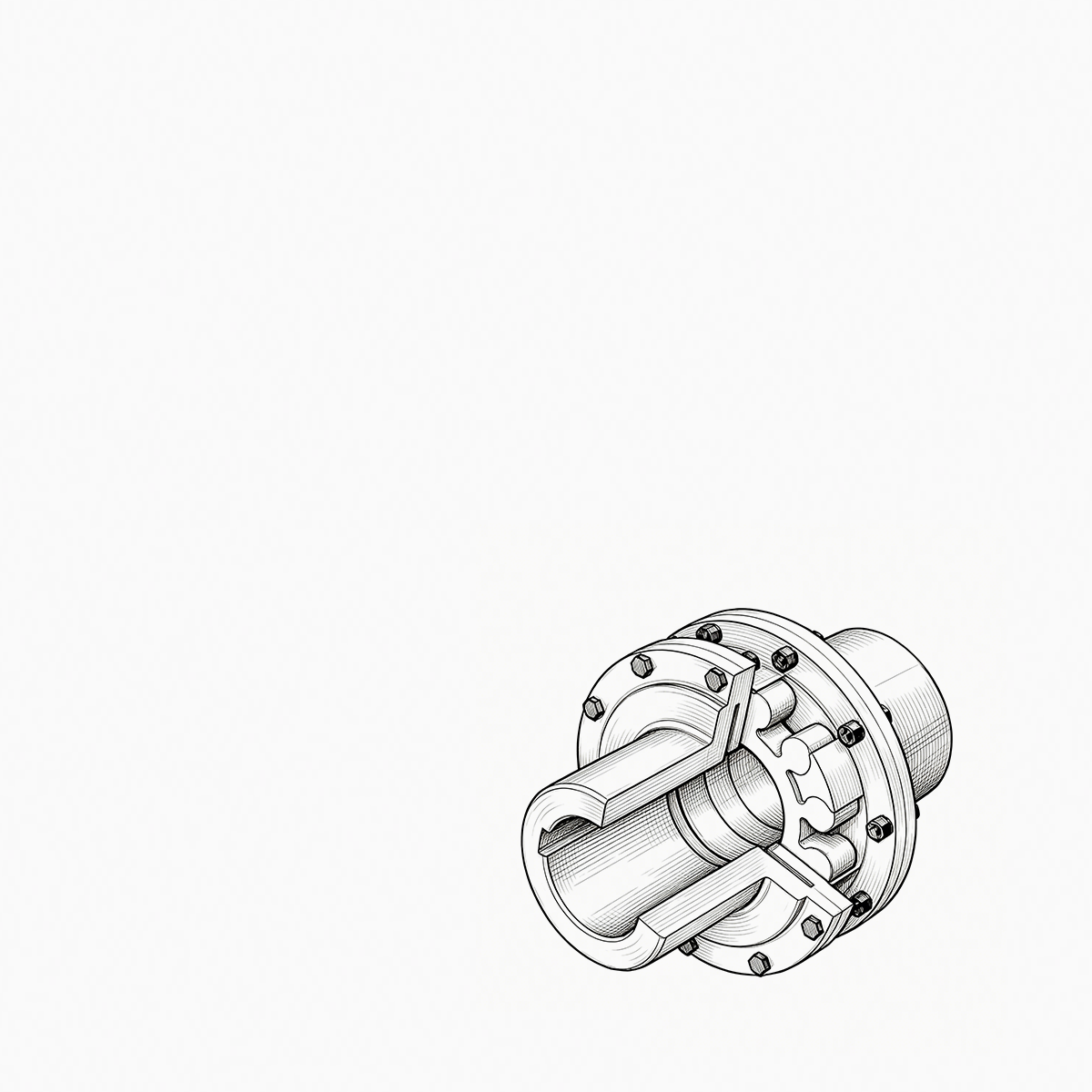
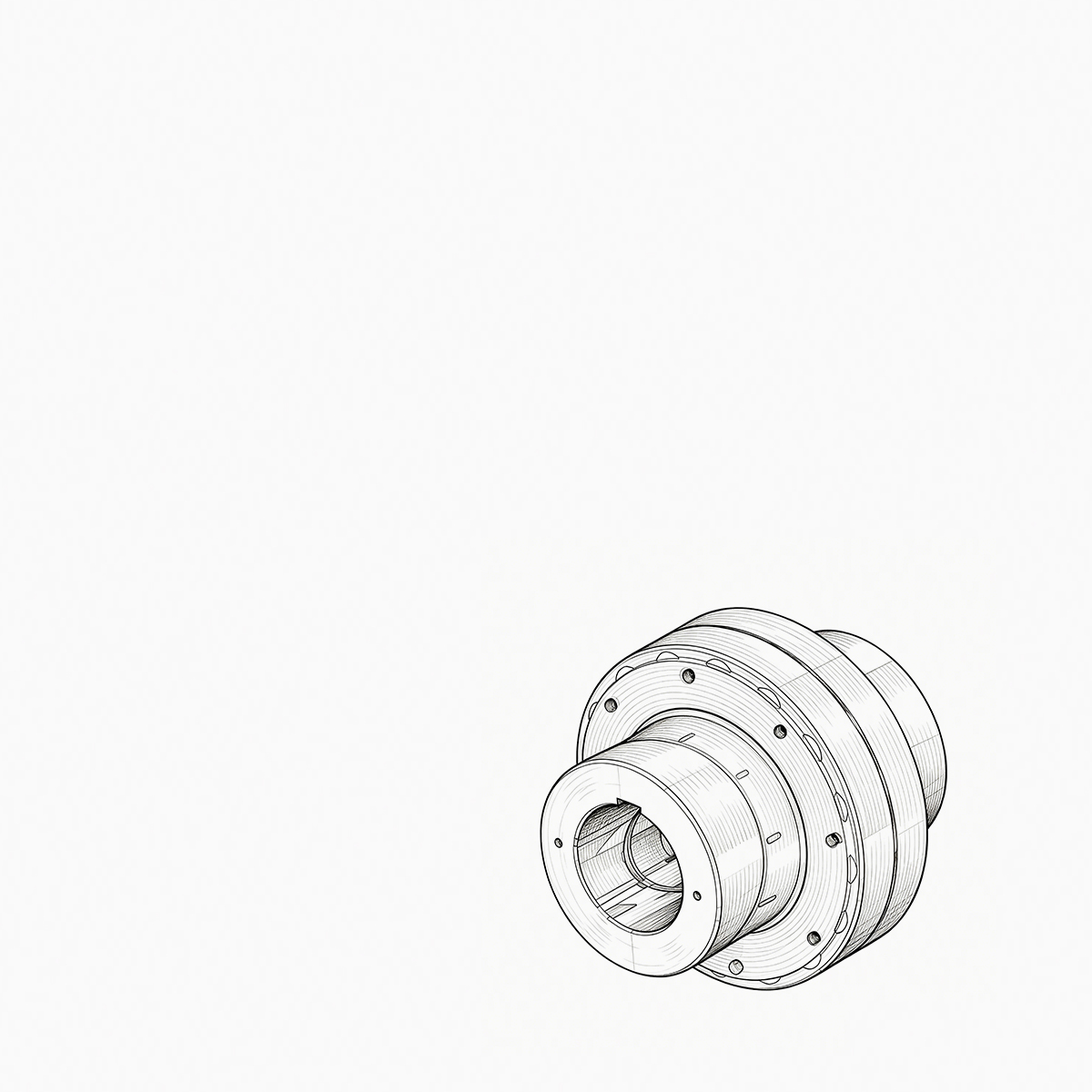
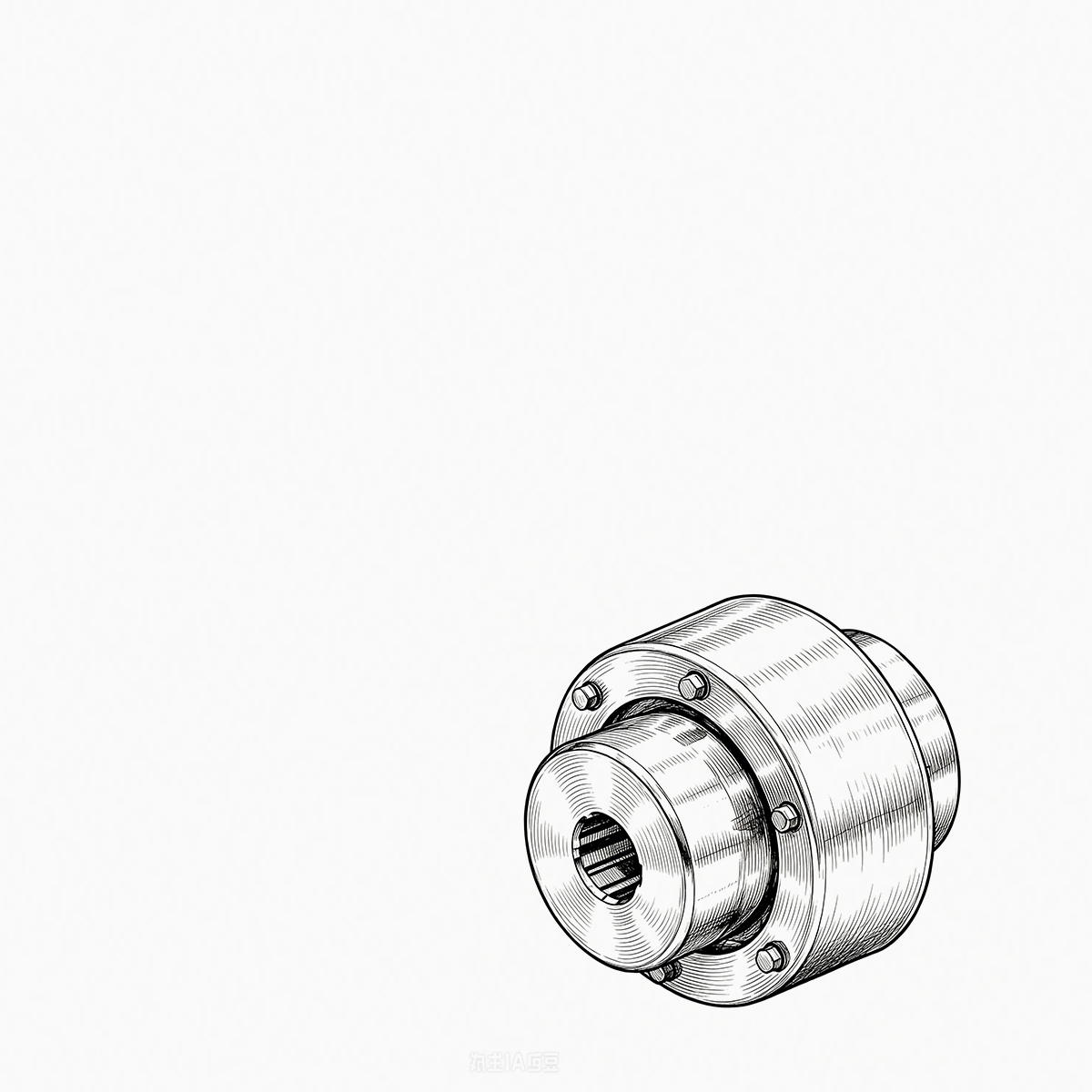
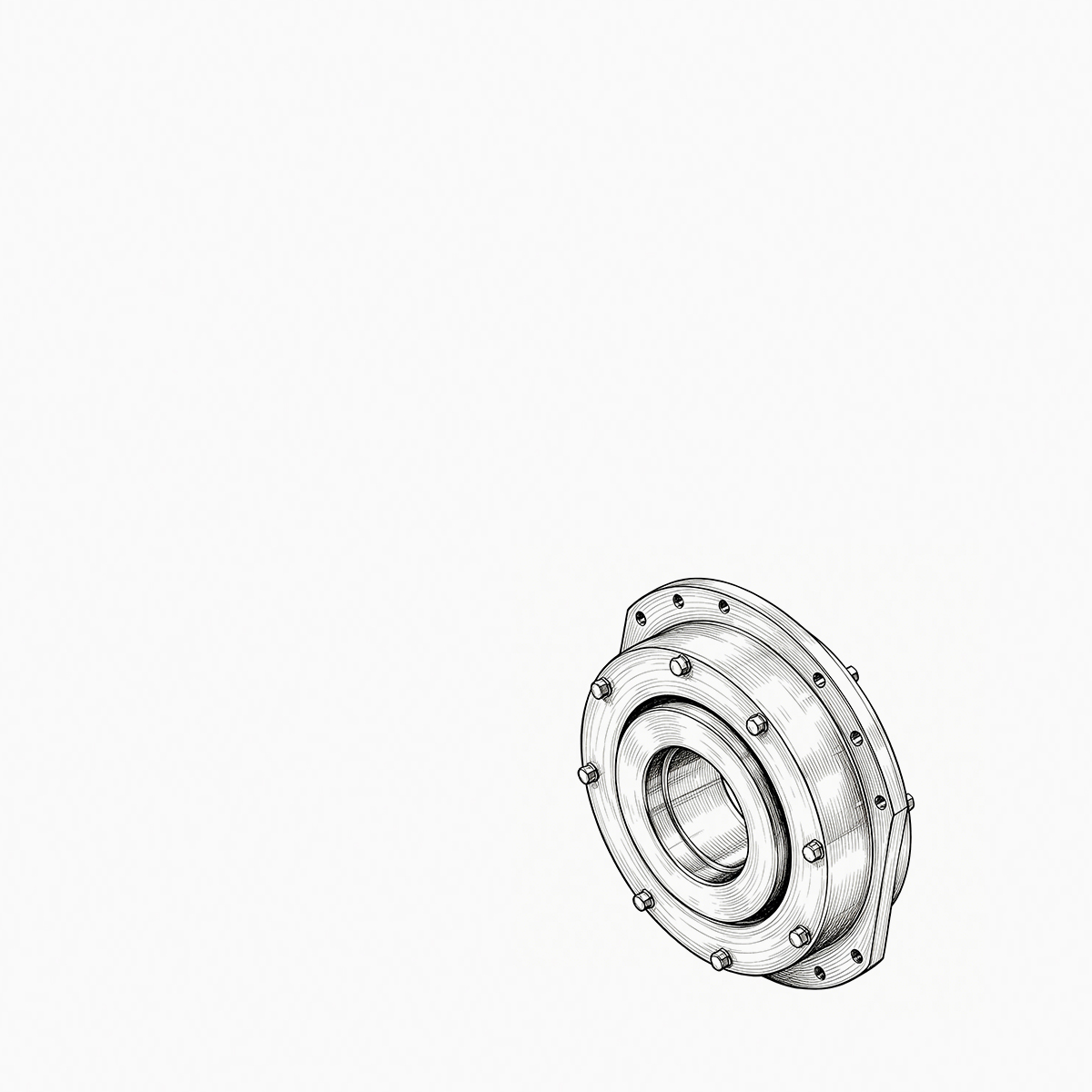
A rotating equipment engineer at a steel finishing mill recently described a flexible coupling that had failed twice in...
READ MORE
Gear Coupling Manufacturers: How to Choose a Reliable Industrial Supplier
Admin 2026-10-08Content
- 1 What Separates One Gear Coupling Manufacturer From Another
- 2 Reading Model Codes Before You Compare Quotes
- 3 Sizing: Torque, Service Factor and Misalignment
- 4 Duties That Justify a Gear Coupling, and Duties That Do Not
- 5 Lubrication and Seals Decide Service Life
- 6 How to Vet a Manufacturer Before a Bulk Order
- 7 Procurement Risks That Appear in Year One
Two quotes land for the same replacement gear coupling: $1,850 from one shop and $2,600 from another. Both promise standard compliance, both quote four weeks, and the drawings look identical. The 40% gap almost never sits in the steel price. It sits in tooth geometry and heat treatment, hub bore and keyway fit, seal and lubrication specification, and the inspection records that prove all three.
That is the short answer to comparing gear coupling manufacturers. The sections below explain how it plays out in a real purchase, from reading catalogue codes to writing vetting steps into a purchase order.
What Separates One Gear Coupling Manufacturer From Another
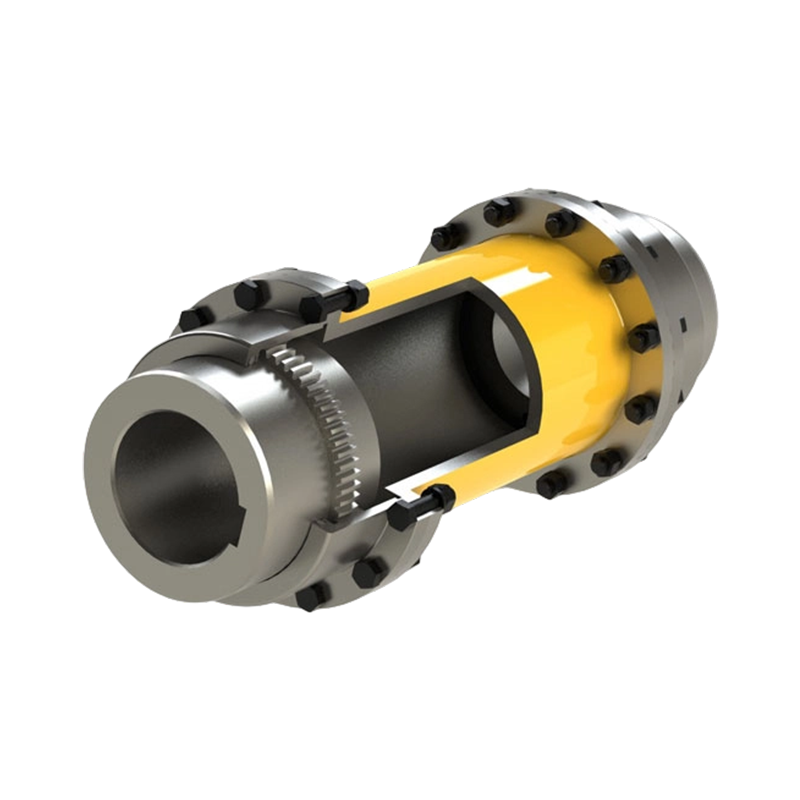
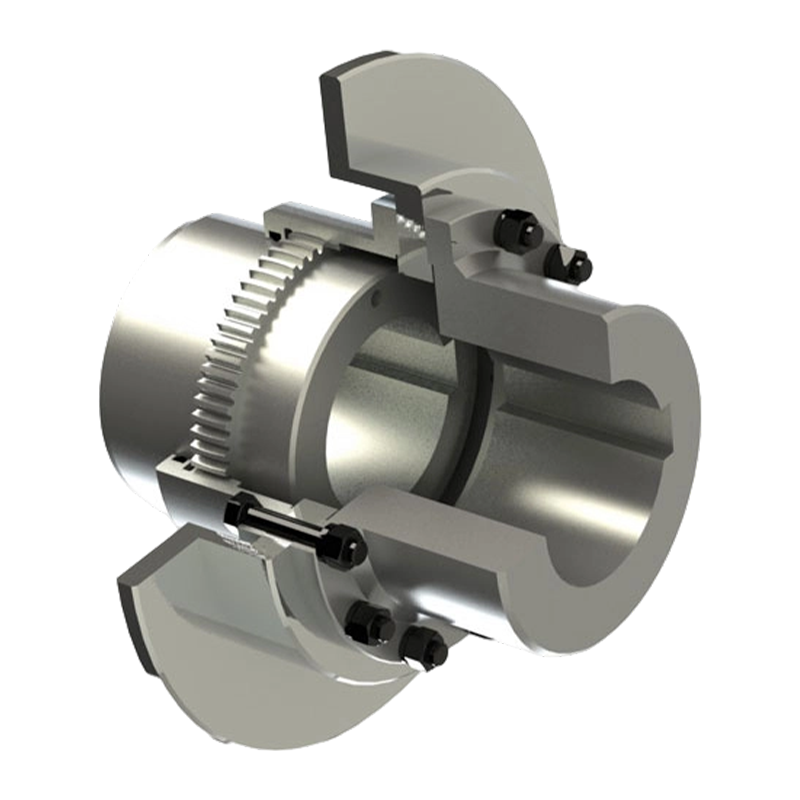
A gear coupling is a simple assembly: two externally toothed hubs, two internally toothed sleeves, seals, and a grease or oil charge. Four things decide whether it runs ten years or ten months.
- Tooth form and heat treatment. Case depth, core hardness and contact pattern drive wear life. A shallow case wears through the flank within months on a reversing mill drive, even when the catalogue rating looks correct.
- Bore, keyway and concentricity. A typical hub is supplied with an H7 bore to mate an h6 or j6 shaft. Check the keyway width tolerance, the concentricity between bore and tooth pitch diameter, and whether the hub is balanced after boring rather than before.
- Seals, O-rings and lubrication charge. The most common field failure is not a broken tooth, it is grease escaping past a hardened or wrongly sized seal. Ask which elastomer is used, and for which temperature range.
- Documentation. Material certificates, heat-treatment records, dimensional reports, runout measurements and balance grades. A supplier who cannot produce them for a first article will not produce them for batch 20 either.
Price differences of 20% to 40% between apparently identical gear couplings usually trace back to these four items rather than to raw material cost.
Reading Model Codes Before You Compare Quotes
Catalogue codes look like noise: GICL, GIICL, GCLD, NGCL, WG, WGC, WGP, WGZ, WGT. Each letter group describes a physical structure, so the code is the fastest way to check whether two suppliers are really quoting the same product. If your drive needs a spacer version and one vendor quotes a basic coupling, the lower number is not comparable.
| Model group | Structural feature | Typical duty | What to verify |
|---|---|---|---|
| GICL, GIICL, GCLD | Flanged drum gear coupling, hubs bolted through a flange, double engagement | General heavy industrial drives, pumps, compressors | Backlash, tooth contact pattern, flange runout |
| NGCL, NGCLZ | Cylindrical gear coupling; the Z version adds an extended brake wheel | Mill drives and hoists with drum brakes | Brake wheel diameter, bolt circle, balance after fitting |
| WG, WGC | Basic crown gear coupling; the C version is made for vertical shafts | Horizontal and vertical pump trains | Whether the vertical version is genuinely oil-tight |
| WGZ, WGP | Crown gear coupling with brake wheel or brake disc | Cranes, winches, emergency braking | Whether the brake element is integral or bolted on |
| WGT | Double engagement with an intermediate spacer | Trains where the rotor must be pulled without moving the driver | Spacer length, axial float, unbalance after assembly |
| JMI, LT/TL | Diaphragm disc and elastic pin-and-bush designs listed under gear categories in some catalogues | Where lubrication is unwanted or parallel offset is large | The actual family, see gear coupling versus drum gear coupling |
Sizing: Torque, Service Factor and Misalignment
Sizing starts with peak torque, not average torque. Manufacturers publish a rated torque per size, and buyers apply a service factor on top of the peak torque of the driven machine.
Commonly applied service factors by duty
These figures reflect common industry practice rather than a fixed rule. Confirm them with both the coupling maker and the driven equipment vendor, because a gear coupling is often selected by bore size instead of torque: a large shaft can push you into a bigger coupling than the torque alone would require.
Misalignment is where gear couplings divide opinion. They handle angular misalignment well and parallel offset poorly. Published figures for a single gear mesh are often around 1.5 degrees, and double engagement splits the total angle across two meshes, so a total near 3 degrees is sometimes quoted. Always read the datasheet instead of assuming.
Illustrative tolerance to parallel offset, gear coupling = 100
The index above is a planning aid, not a specification. Use it to sense whether a gear coupling is the right family at all, then size from the vendor's own ratings.
A short decision tree for narrowing the field
- High torque, moderate speed, horizontal drive
- Standard double engagement, flanged drum gear coupling
- Add a spacer type when the driven rotor must be removed in place
- High torque plus a braking duty
- Brake wheel or brake disc version, or a crane-specific drum coupling
- Large parallel offset or no lubrication allowed
- Move to diaphragm, tire or elastomeric families instead of gear teeth
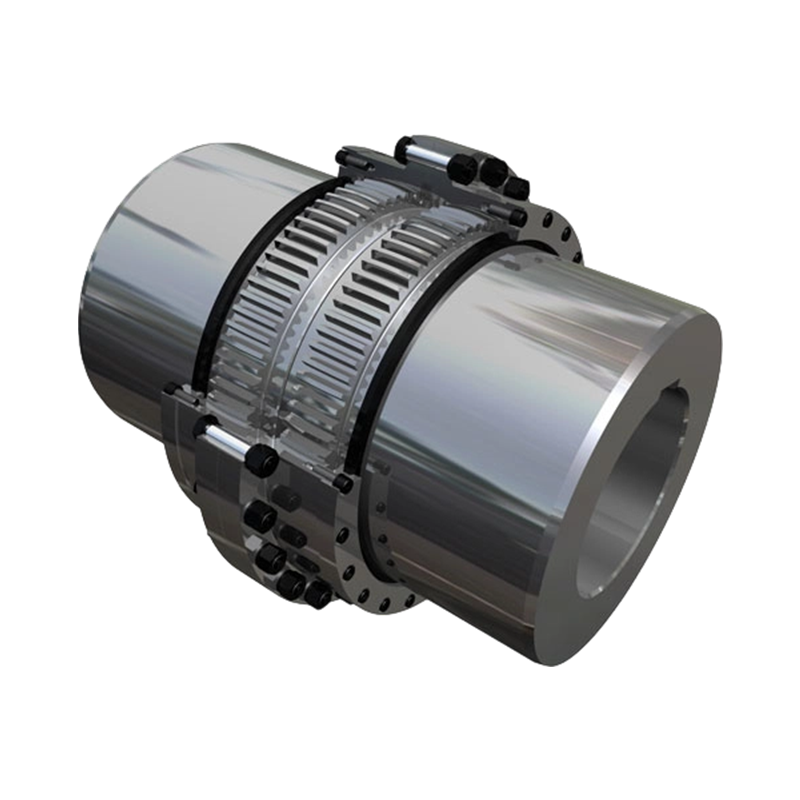
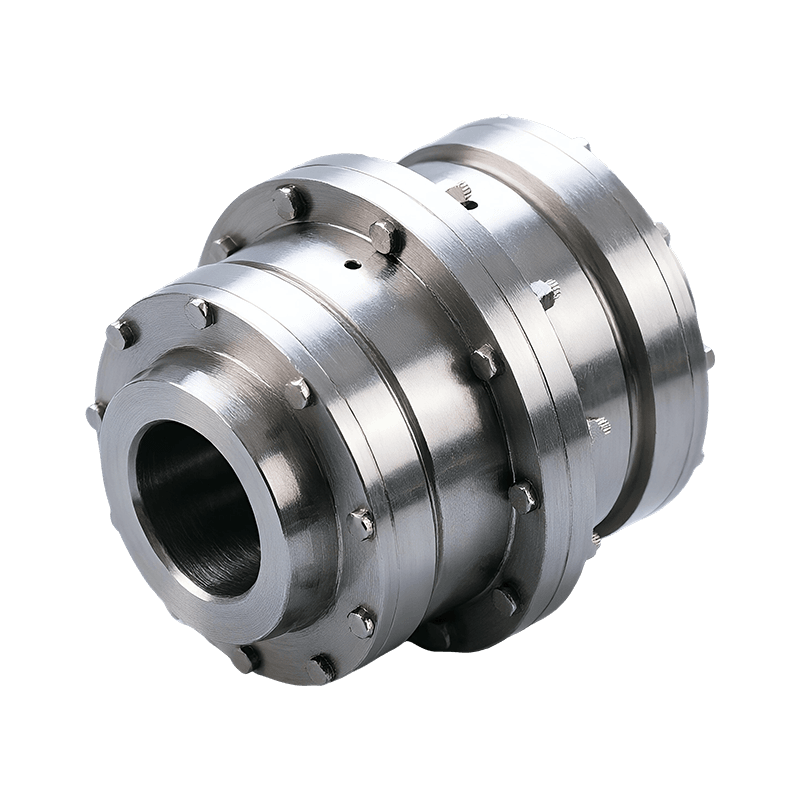
For general heavy industrial drives, a standard flanged drum gear coupling such as the GICL series covers most of this ground, and it is the version worth quoting first when you compare suppliers.
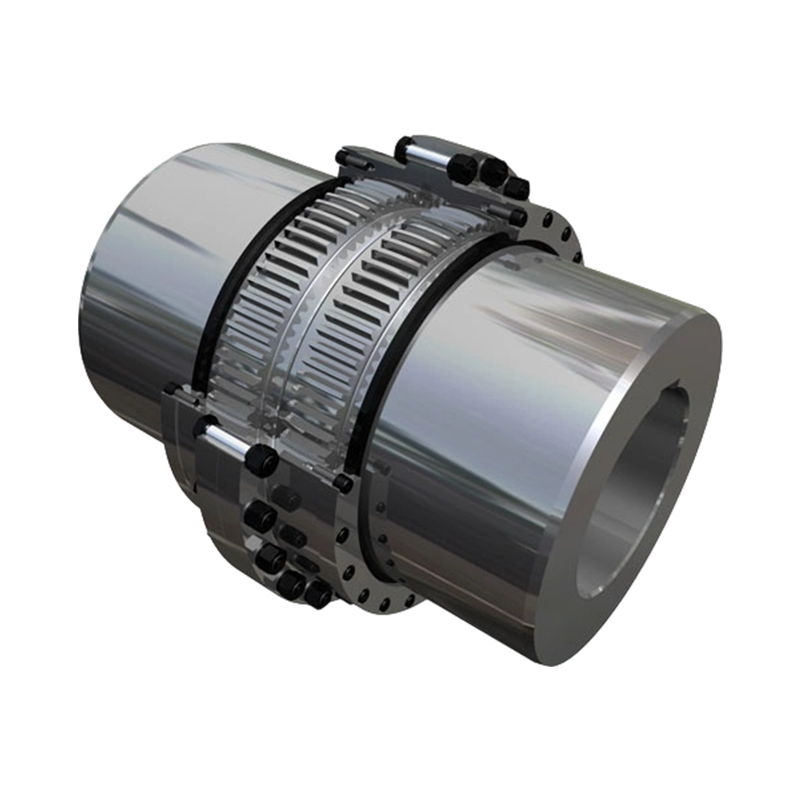 GICL Type Flanged Drum Gear Coupling for Heavy Industrial DrivesA standard flanged drum gear coupling for general heavy-industry drives, offering high torque capacity, misalignment compensation and axial sliding for thermal shaft growth.View Product →
Duties That Justify a Gear Coupling, and Duties That Do Not
Where a gear coupling is the right answer
- Rolling mill main drives and mill pinions, where torque density per millimetre of diameter matters most.
- Crane hoists, winches and slewing drives, including arrangements needing an integral brake wheel or disc.
- Marine reduction gear to propeller shaft lines, where vibration and salt air are constant.
- Petrochemical and power generation pump and compressor trains running hot in tight spaces.
The reasons repeat: the highest torque capacity per unit of diameter among flexible couplings, tolerance of high temperature, and the ability to slide axially as shafts grow with heat.
Where a gear coupling is the wrong answer
- Parallel offset beyond a fraction of a millimetre, where an elastomeric or tire coupling absorbs movement without tooth wear.
- Applications where grease or oil mist is unacceptable.
- Very high speed with low torque, where a diaphragm coupling avoids lubrication and balance problems.
On hoisting and construction machinery, the coupling often carries radial load from the rope drum as well as torque. A spherical roller drum coupling is built for that combination, with a self-aligning roller element taking the radial component.
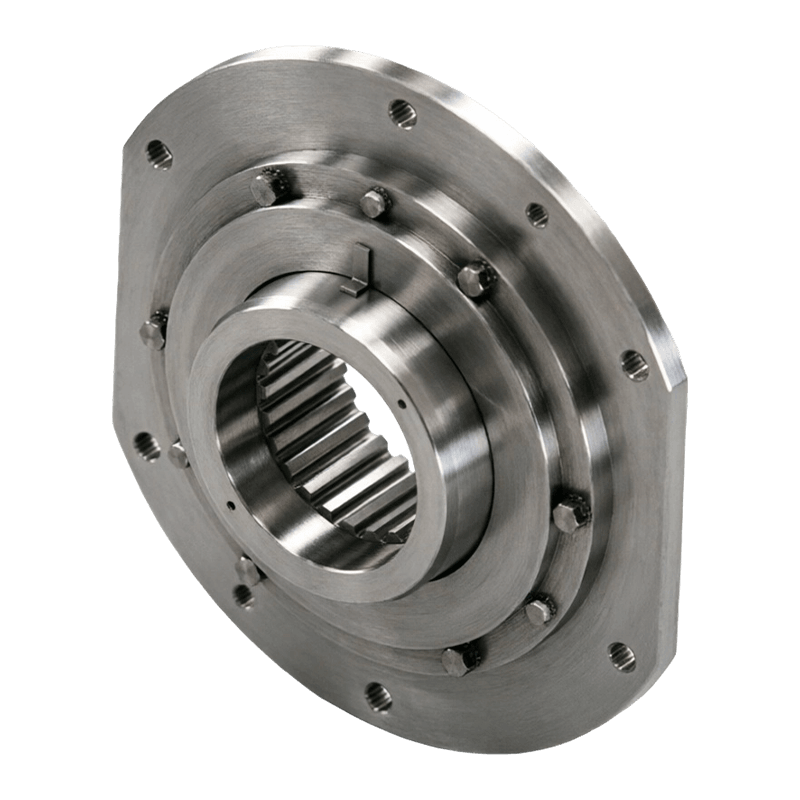 WJ Type Spherical Roller Drum Coupling for Hoisting DrivesA heavy-duty drum coupling that carries torque and radial rope-drum loads via a self-aligning spherical bearing, suited to hoisting and drum transmission systems.View Product →
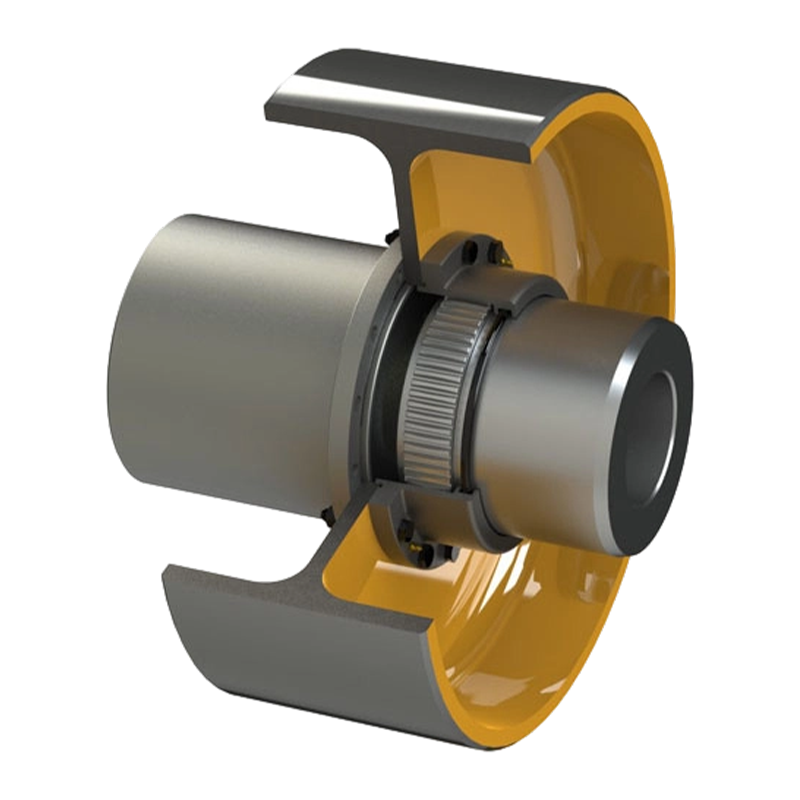
Where a drum brake sits directly on the drive train, the brake element is often integrated into the coupling itself. Ask whether that brake wheel or disc is machined as one piece with the sleeve or bolted on, because a bolted joint that is balanced before assembly can drift out of balance after it.
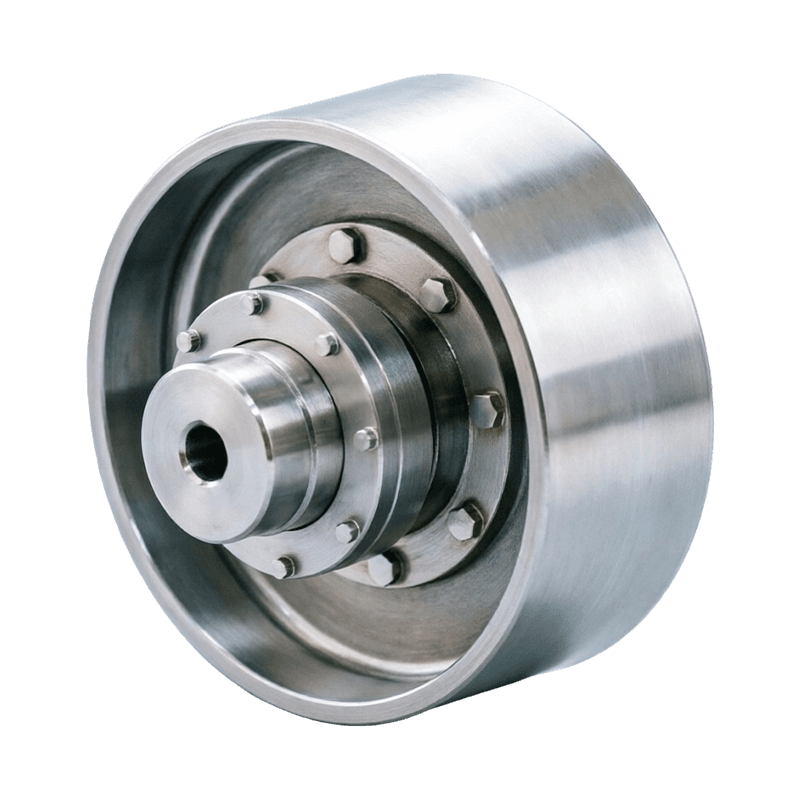 WGZ Type Crowned Gear Coupling with Integrated Brake DrumA heavy-duty crowned-gear coupling with integrated brake drum for hoisting drives; check grease or oil lubrication, fill quantity and re-lubrication interval.View Product →
Lubrication and Seals Decide Service Life
Gear couplings are lubricated components, and the lubrication specification is part of what you are buying. Grease is normal for lower speeds and easier field maintenance; oil-tight designs suit higher speeds where grease would be thrown clear of the mesh. Lubrication practice for flexible couplings is covered by standards such as AGMA 9001, and a serious supplier will state the grease type, fill quantity, temperature range and re-lubrication interval rather than leaving it to the installer.
Seals deserve the same scrutiny. Check the elastomer for the operating temperature, the bore fit of the seal, and whether the design has a second barrier for dirty sites such as mining or steel plants. Alignment should be measured and recorded before the coupling is assembled, not after, because once the sleeves are on, the readings describe the coupling rather than the machine.
How to Vet a Manufacturer Before a Bulk Order
- Send a written datasheet: peak torque, speed, bore and keyway, expected misalignment, ambient and operating temperature, duty cycle, and mounting restrictions.
- Ask for the material and heat-treatment certificate for the tooth flanks, including case depth.
- Request a first-article inspection report covering bore diameter, keyway width, concentricity, runout and backlash.
- Confirm the balance grade and whether balancing happens after final boring.
- Order one unit and run it, or at least trial-assemble it on the shaft before releasing the batch.
- Price the wear parts with the coupling: seal kits, O-rings and spare sleeves. A cheap coupling with no spare seals becomes an expensive one at the first re-lubrication.
Procurement Risks That Appear in Year One
Most failures attributed to a bad coupling were decided at the quotation stage.
| Risk | How it shows up | Control to write into the purchase order |
|---|---|---|
| Service factor too low | Flank wear and metallic particles in the grease | Require a peak-torque calculation with the service factor stated on the quote |
| Loose bore or keyway fit | Fretting, key shear, rising vibration | Require a dimensional report for bore, keyway and runout |
| Wrong or missing lubricant | Seized mesh, leaking seals within weeks | Specify grease type, fill quantity, temperature range and re-lube interval |
| Unbalance after boring | Vibration at speed, premature bearing damage | Specify the balance grade and the stage at which balancing is performed |
| Undocumented misalignment | Seal failure soon after commissioning | Require recorded alignment readings before coupling assembly |
Shortlisting gear coupling manufacturers comes down to evidence rather than price. Send the same datasheet to three suppliers, ask each to mark up the drawing and return it with a dimensional and heat-treatment report, and compare what comes back. The quote that arrives with a marked-up drawing, a stated service factor and a seal specification is usually the one that survives its first year in service, whatever the number at the bottom of the page.
PREV: No previous articleNEXT: Drum Gear Coupling Selection: Types, Misalignment, Torque and Applications
Be the First to Know
For exclusive deals and latest offers, sign up by entering your email address below.
Related products
News
-
-
Gear Coupling vs. Drum Gear Coupling: The Core Difference The main difference is that "gear coupling" is a broad catego...
READ MORE -
Industrial Couplings: The Definitive Technical Encyclopedia – Classification, Sizing, Failure Prevention, and Lifecycle...
READ MORE -
Your compressor train is running at 9,800 rpm when the vibration monitor triggers an alarm. The first component your ma...
READ MORE -
A maintenance engineer pulls a failed coupling from a pump drive. The elastomer sleeves are cracked, the pin bolts are ...
READ MORE -
Consider a 250 kW crane hoist that begins to vibrate only when the load is lifted. The drum gear coupling is inspected ...
READ MORE


ABOUT US
PRODUCTS
INDUSTRIES
CONTACT US
- Phone: +86-18652865511
- Email: sales@ohmach.com
- Address: No.1, Minying Developing Zone, Zhenjiang, Jiangsu, China
Copyright Zhenjiang Orienthold Machinery Co., Ltd. All Rights Reserved.
 Custom Industrial Shaft Coupling Manufacturers